
Do you have ideas for digital energy solutions that can help future-proof district heating in Copenhagen?
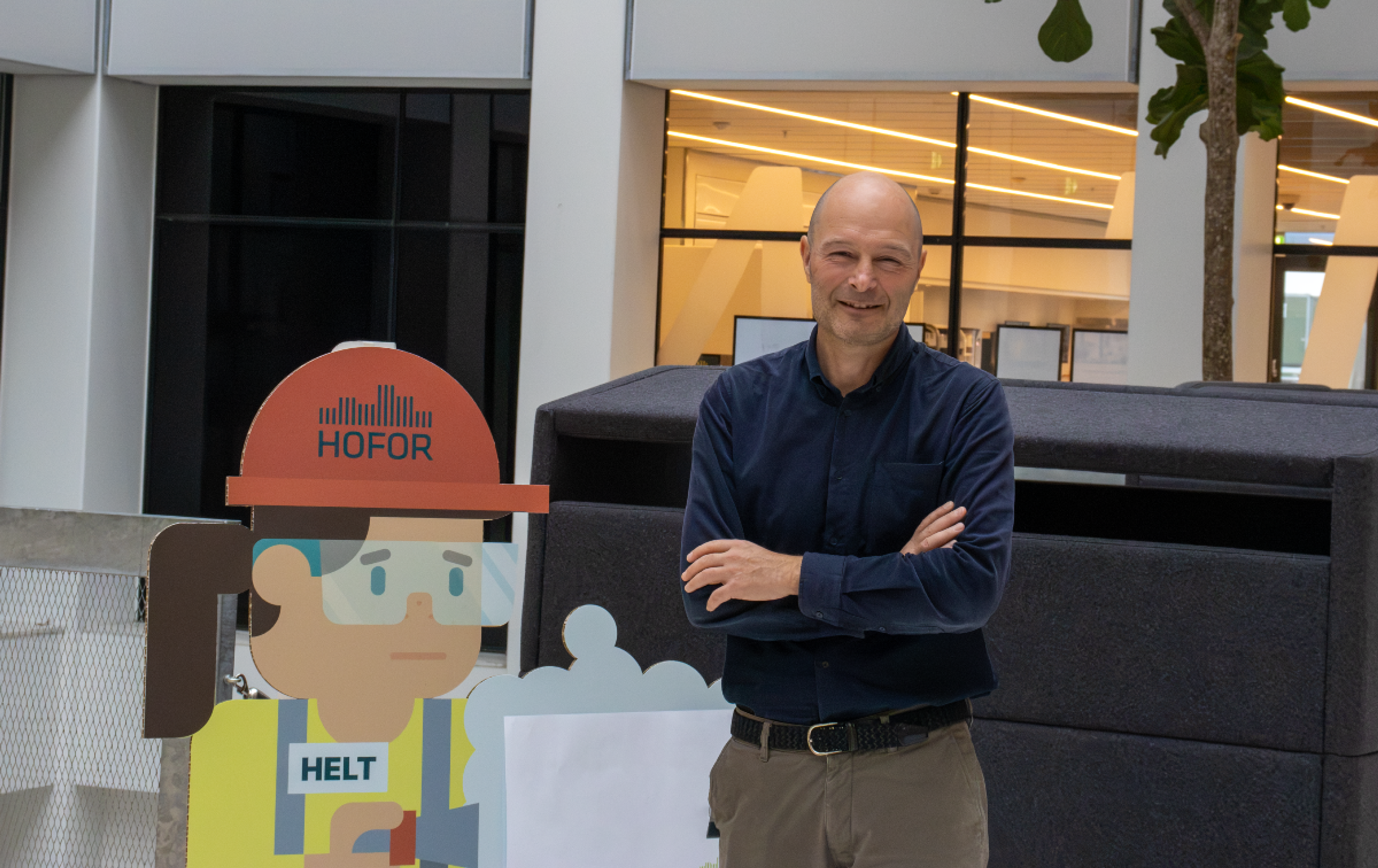
HOFOR estimates that up to 75% of the district heating substations in Copenhagen’s residential buildings are currently offline and cannot be accessed digitally. This limits opportunities to improve energy efficiency, strengthen security of supply and accelerate the green transition. HOFOR and Digital Energy Hub want to change that through a new challenge sprint, inviting companies to help develop smart solutions for the future of district heating.
HOFOR and Digital Energy Hub are inviting companies to help develop new smart solutions for the district heating systems of the future. The initiative kicks off with a new Challenge Sprint on 27 October 2026.
Kristian Honoré, Energy Planner at HOFOR, explains the challenge, the opportunities, and why small and medium-sized companies should consider taking part in the new sprint.
Kristian, what challenge are you looking for help to solve?
We are facing a very specific challenge in the district heating sector: a large share of the heating substations located at our customers’ properties are still offline. This means that, in many cases, neither we nor our customers have a clear picture of what is happening in these systems until a problem occurs, or until someone physically goes down into the basement to take a closer look.
In Copenhagen, we estimate that around 75% of district heating substations are not digitally accessible. This applies to apartment buildings and, in particular, to many of our customers living in single-family homes.
At the same time, much of the installed equipment has a lifespan of 20 years or more, so realistically, it is not something that can or should simply be replaced overnight.
Why is that a problem?
Because we are missing out on a range of opportunities. If we can bring more systems online, we, our customers and their partners will be able to monitor and optimise operations much more effectively, reduce energy consumption and create a more flexible district heating and energy system.
Today, many heating substations are controlled solely on the basis of the current outdoor temperature. But if we connect them to digital tools and, for example, weather forecasts, we can operate them much more efficiently and intelligently.
If the sun is going to shine three hours from now, the system may not need to supply as much heat right now because there is already a significant amount of heat stored in the building. Forecast-based control can deliver substantial energy savings without compromising the comfort of individual consumers.
How does this relate to the green transition?
It is about the classic energy trilemma and finding the right balance between the green transition, security of supply and affordability.
We are continuously working to reduce CO₂ emissions and increase the share of renewable energy in district heating. At the same time, we need to ensure that the system remains robust and efficient.
By managing consumption more intelligently, we can reduce the need for expensive, fossil-based peak-load production during periods of highest demand.
You also talk about emergency preparedness and resilience. Why are these important?
Energy supply, including district heating, is critical infrastructure, and emergency preparedness is becoming increasingly important. That is why security of supply needs to be considered in everything we do.
If we gain better insight into consumption and the ability to communicate securely with the systems, the overall system becomes more efficient and resilient. It also gives us more options to respond quickly and prioritise capacity in extraordinary situations.
Ultimately, it is about ensuring a stable heat supply for all customers.
What types of companies are you hoping to see at the new Challenge Sprint in October?
We are particularly interested in companies that know how to make complex technologies simple for end users.
We are not necessarily looking for large, sophisticated platforms. We are looking for smart, affordable and user-friendly solutions that ordinary people can install and use without difficulty.
These could be companies working with smart home technology, IoT, sensors, control solutions, software or data integration. But we are also very open to solutions from other industries. Sometimes the best ideas come from companies that look at the challenge with fresh eyes.
What might a solution look like in practice?
One interesting approach is to retrofit existing systems. In other words: How can we make existing offline heating substations digital without replacing the heating controls or the entire installation?
If a solution can connect an existing heating substation to the internet, integrate data from sources such as DMI and make the system intelligent and accessible online, we will already have come a long way.
In fact, much of the data we need is already available. The challenge is to turn that data into a solution that actually works in the real world at customers’ properties.
What do companies gain from participating?
First and foremost, they gain access to a very specific challenge with significant market potential.
In our area of Greater Copenhagen alone, we are talking about approximately 10,000 apartment buildings and around 20,000 customers in single-family homes. A large proportion of these are still not digitally connected from a district heating perspective.
And this is not an issue unique to HOFOR. It is a challenge facing large parts of the district heating sector.
At the same time, participating companies get the opportunity to engage directly with one of Denmark’s largest utility companies and contribute to developing solutions that can support the green transition, improve energy efficiency and strengthen societal resilience.
If you had to give one good reason why a smaller company should participate, what would it be?
Because this is a real challenge that we cannot solve alone.
We need new perspectives and new solutions. If you are a smaller company with expertise in digitalisation, data, hardware, software or user experience, this is an opportunity to help develop the next generation of intelligent district heating solutions.
And that work could make a real difference for customers, the climate and security of supply.
Would you like to help develop the digital district heating solutions of the future?
Join the new Challenge Sprint on 27 October 2026.
Here, you can gain first-hand insight into the challenge, meet HOFOR and explore opportunities to turn ideas into concrete solutions.
Latest news






Sign up to our newsletter
Skibsbyggerivej 5, 3. sal.
9000 Aalborg
Navitas
Inge Lehmanns Gade 10
8000 Aarhus C
House of Offshore Innovation
Kanalen 1
6700 Esbjerg
Port House
Vendersgade 74
7000 Fredericia
BLOXHub
Bloxhub, Bryghuspladsen 8, 3. sal,
1473 København K
Energy Cluster Denmark
Nørre Havnegade 43
6400 Sønderborg
©Energy Cluster Denmark 2026