

Latest news
 Can the sewer system help support the power grid? SONFOR Flex has investigated the potential of the wastewater system
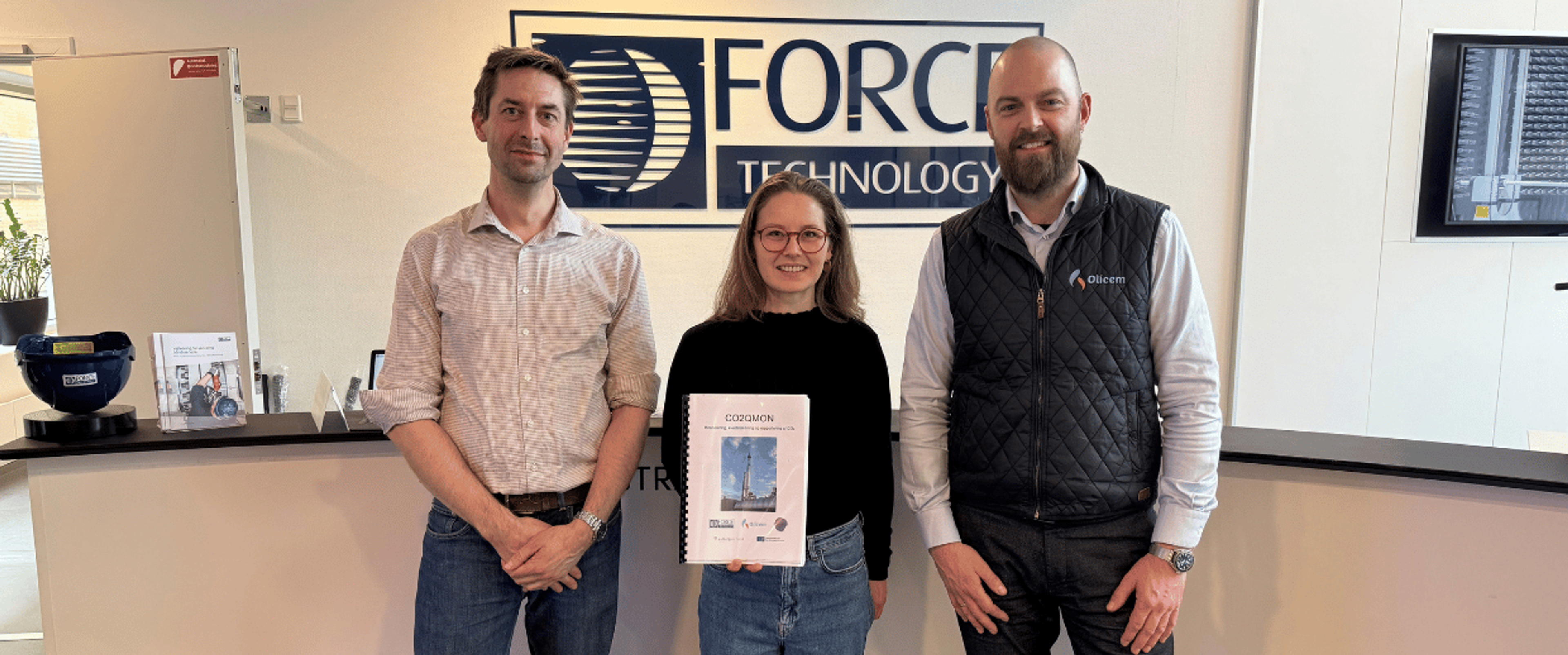 New report aims to reduce uncertainty around CO2 quality data management in the CCUS value chain
 Strong interest in energy innovation: 54 applications representing projects worth DKK 110 million

Denmark will need significantly more electricity in the coming years as transport, heating and industry are increasingly electrified, while the electricity grid is already under pressure. This makes it increasingly important to find new ways of shifting electricity consumption to times when there is more capacity in the grid, when electricity prices are lower, or when large amounts of solar and wind power are available.
In the SONFOR Flex innovation sprint, facilitated by Digital Energy Hub, SONFOR, the University of Southern Denmark and Center Denmark have explored the potential for flexibility in wastewater infrastructure and how three key operational areas can provide flexibility to the energy system by mapping potential, data flows and control strategies.
From traditional operation to intelligent flexibility
SONFOR operates an extensive network of pipes and several hundred pumps, which today are primarily controlled according to the immediate operational needs. However, because the wastewater and stormwater system is designed to handle large volumes of water, there are periods when there is additional capacity available in pipes and basins.
This capacity could potentially be used to delay pumping. In this way, some electricity consumption could potentially be shifted to times when electricity is cheaper, or when large amounts of solar and wind power are available – without compromising operations, treatment quality or the risk of overflow.
“Traditionally, pumps in wastewater and stormwater systems operate according to the immediate operational needs. But our system is designed to handle large volumes of water, which means that there are periods when there is additional capacity in pipes and basins. With data and intelligent control, we can investigate whether this capacity can be used more actively, allowing us to delay pumping and shift part of our electricity consumption to times when electricity is cheaper or when large amounts of solar and wind power are available in the electricity grid,” says Jesper Ryegaard Rasmussen, Business Manager at SONFOR.
Data paves the way for flexible solutions
As part of SONFOR Flex, the University of Southern Denmark has contributed data analyses and modelling. The work has provided insights into how the pumps operate today, where peak loads occur, and how individual pumping stations operate differently. These insights will be used to map the overall flexibility potential of the hydraulic volume through advanced hydraulic models.
“SONFOR Flex demonstrates how digitalisation and flexible control can make the wastewater sector more energy efficient while also creating value for the electricity system. For SDU, it is important to translate research-based modelling into concrete solutions together with industry,” says Ali Khosravi, Associate Professor at the Department of Mechanical and Electronics Engineering, University of Southern Denmark.
A step towards a more flexible energy system
According to Digital Energy Hub and Center Denmark, the project demonstrates how existing infrastructure can take on a new role in the energy system of the future. The next step is to explore concrete pilot and demonstration projects where the solutions can be tested in practice. VUDP has granted DKK 2.2 million for this purpose through the SmartFlow project, which builds on the results of this sprint. In the longer term, the experience gained from SONFOR Flex could also be relevant to other utility companies working with similar systems and challenges.
“If we are to succeed with the green transition, we cannot only build new infrastructure. We also need to become better at using the infrastructure we already have. SONFOR Flex is a good example of how data and cross-sector collaboration can open up new solutions that can both strengthen utility operations and create flexibility in the energy system,” says Michael Sørensen, Project Manager at Digital Energy Hub and Head of Innovation at Center Denmark.
Read more about the sprint in the results story here.
Facts about SONFOR Flex
SONFOR Flex originated from an idea at SONFOR that the existing wastewater system could be used more intelligently.
SONFOR Flex was carried out as an innovation sprint in collaboration between SONFOR, the University of Southern Denmark and Digital Energy Hub, which is facilitated by Center Denmark, DigitalLead and Energy Cluster Denmark and supported by Industriens Fond.
An innovation sprint is a short and focused process in which companies, researchers and experts work together to investigate a specific challenge and identify possible solutions.
The sprint explored the potential for intelligent control and flexibility in the wastewater and stormwater system. The work was based on data from, among other things, pumps, flow measurements, basins and wastewater treatment processes.
The sprint is intended to form the basis for future pilot and demonstration projects and the further development of intelligent control tools.
Facts about Digital Energy Hub
Digital Energy Hub is an innovation hub funded by Industriens Fond from 2025 to 2028 with DKK 19.7 million. The project is facilitated by Center Denmark, DigitalLead and Energy Cluster Denmark.
Read more at www.digitalenergyhub.dk
If you have any questions about the project or would like to become part of the hub, please contact Michael Sørensen, Head of Innovation, Center Denmark, at mics@centerdenmark.com or +45 2345 8362.


Sign up to our newsletter
Skibsbyggerivej 5, 3. sal.
9000 Aalborg
Navitas
Inge Lehmanns Gade 10
8000 Aarhus C
House of Offshore Innovation
Kanalen 1
6700 Esbjerg
Port House
Vendersgade 74
7000 Fredericia
BLOXHub
Bloxhub, Bryghuspladsen 8, 3. sal,
1473 København K
Energy Cluster Denmark
Nørre Havnegade 43
6400 Sønderborg
©Energy Cluster Denmark 2026