
“The project has been an indisputable success”

“We sold our first project in 2021, when energy prices were skyrocketing and power-saving software like ours was in high demand. At that time, our customer saved 4-5 million kroner in Denmark alone with the solution we had developed in ECO-RAN,” says CEO Søren Søndergaard from the software company 2operate:
“The software caused a stir in the market. We received inquiries from mobile companies from Europe, Asia, North America and the Middle East, and we have since had substantive negotiations with 10-15 large operators. They are all interested in the technology, and they can also see the savings.
But current energy prices mean that the business case today is different. Customers are still saving money, but less – and this cools their interest in incorporating new technology into their operations. At the same time, they are cautious about committing to a company as modestly sized as us. That is why we have initiated a collaboration in the North American market with Palantir, which has the volume to handle the task.
The ECO-RAN project has been an indisputable success. Even though energy prices have fallen considerably since 2021, I would estimate that our customer still saves a few million kroner annually compared to the starting point.
It has also had a great impact on us as a company. Before the innovation project, 2operate was a company in the mobile industry; today we are also an energy company and see many perspectives in engaging ourselves more deeply in that area.
In particular, the increased amount of fluctuating energy that renewable energy sources bring with them will give us good opportunities to bid,” says Søren Søndergaard.
Latest news
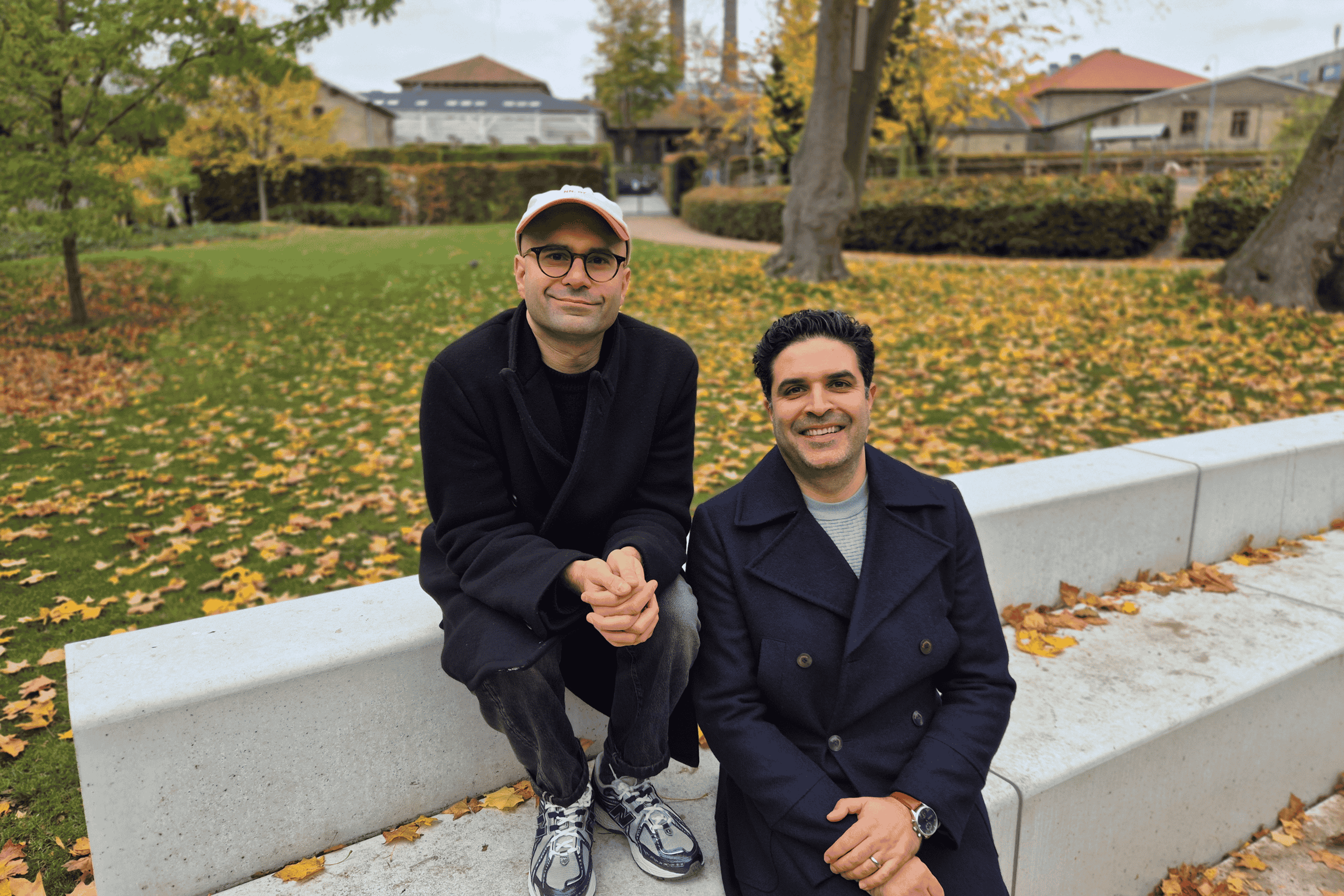
 New innovation project: Future district heating must shift consumption to when energy is cheap
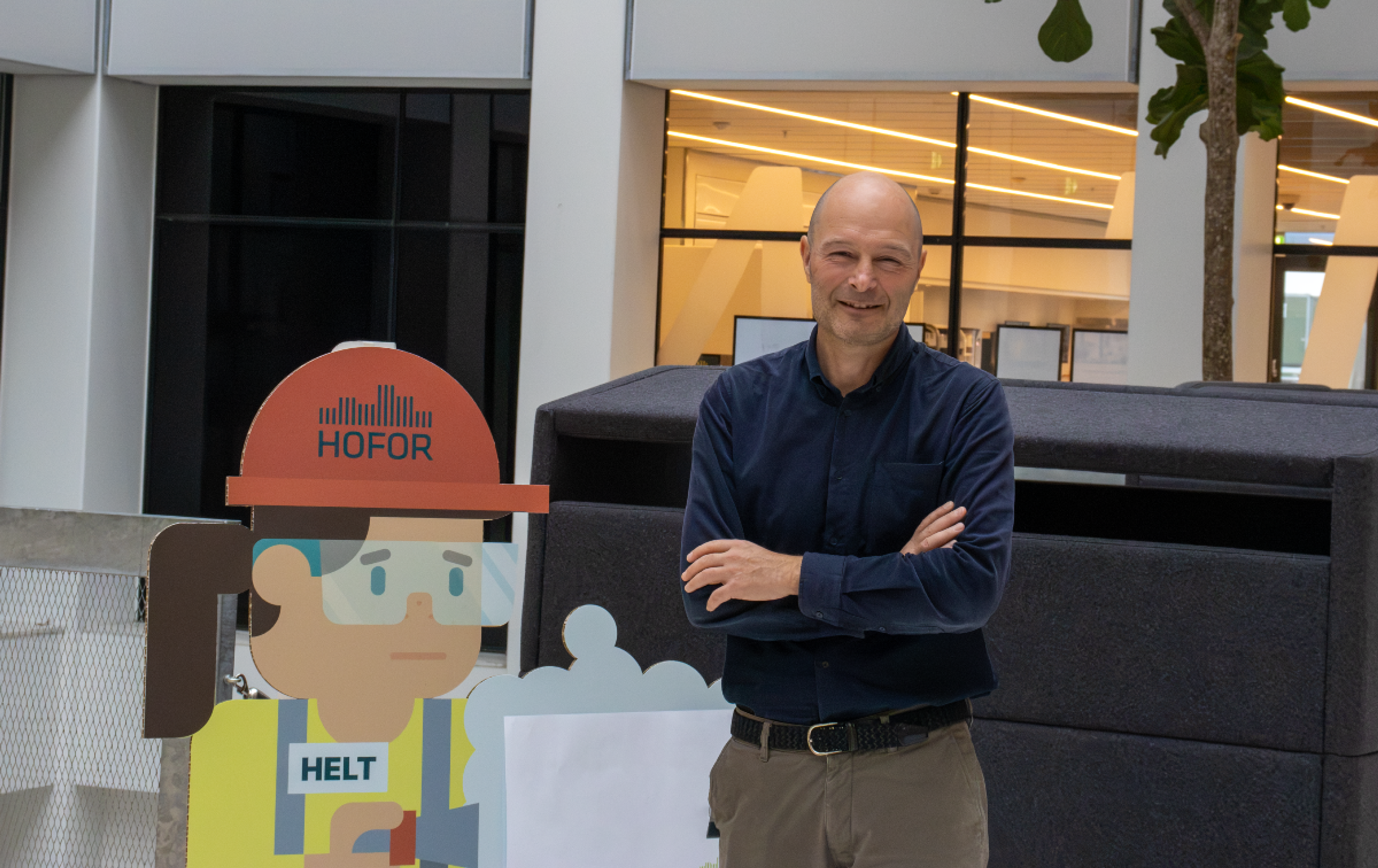 Do you have ideas for digital energy solutions that can help future-proof district heating in Copenhagen?
 Can the sewer system help support the power grid? SONFOR Flex has investigated the potential of the wastewater system

Flexibility is becoming increasingly important as more renewable energy enters the energy system. When the wind is blowing and the sun is shining, the available energy should be used as efficiently as possible. RACE 2.0 will therefore explore, among other things, how heat consumption in larger buildings can be shifted in time to better match both energy production and the load on the district heating network.
RACE 2.0 has a total budget of approximately DKK 8 million, of which EUDP is investing around DKK 4.7 million. The project partners are Glaze ApS, Glaze AB, BROEN, Aalborg University, Albertslund Forsyning, Gudenådalens Energiselskab and Energy Cluster Denmark.
Building on RACE
The project is a continuation of RACE, where real-time data, a digital twin and AI-based control were demonstrated in the district heating network in Brønderslev. The project showed that even a well-developed district heating network can be further optimised and operated more efficiently.
In RACE 2.0, the solution will be expanded to two new demonstration sites at Albertslund Forsyning and Gudenådalens Energiselskab. At the same time, the control will move closer to the actual heat consumption.
For example, a larger building could be heated slightly more when plenty of heat is available and use less heat during periods of high demand.
“What is new in RACE 2.0 is that we are also looking at the demand side, not only the production side. If we can control consumption among some large consumers and shift it slightly in time, it becomes much easier to predict demand and optimise the entire system,” says Per Printz Madsen from Aalborg University.
Significant potential in Denmark and abroad
RACE also showed that there is potential for further optimisation, even in a highly developed Danish district heating system. With RACE 2.0, the ambition is to further reduce energy consumption and heat losses while making better use of the existing infrastructure.
“In RACE, we showed that it is possible to optimise a district heating system even when the starting point is already a well-developed and well-operated Danish network. That says something about the potential. Many district heating companies, both in Denmark and internationally, have the opportunity to lower supply temperatures and pressure and thereby reduce energy consumption,” says Jakob Appel, Managing Partner at Glaze and project manager for RACE 2.0.
At Gudenådalens Energiselskab, the potential is very tangible. Around 20,000 MWh of heat is lost in the distribution network each year, representing a value of approximately DKK 6–7 million.
“One of the biggest costs for a district heating utility is heat lost in the distribution network. If we can reduce that loss, there is a lot of money to be saved. And ultimately, those savings benefit the consumers,” says Charles Winther Hansen, Director at Gudenådalens Energiselskab.
At Albertslund Forsyning, the project will explore how AI-based control of the network and selected large heat consumers can help shift demand and reduce peak loads.
“For us, the potential lies in making the district heating network and buildings work more closely together. If we can shift some of the heat consumption to times when energy is available, we can make better use of both the energy and the existing infrastructure – without compromising comfort for consumers,” says Lasse Jakobsen, Energy Consultant at Albertslund Forsyning.
RACE 2.0 in brief
- Building on RACE: RACE 2.0 further develops the digital twin, real-time data and AI-based control demonstrated in the first RACE project.
- Connecting the entire district heating system: The project integrates data and control across production, the distribution network and selected buildings.
- Two new demonstration sites: The solution will be tested under real operating conditions at Albertslund Forsyning and Gudenådalens Energiselskab.
- Ambitious targets: The project aims for annual energy savings of around 10%, as well as an additional 5–10% saving in selected buildings and better use of existing network capacity.
- Partners and funding: The project partners are Glaze ApS, Glaze AB, BROEN, Aalborg University, Albertslund Forsyning, Gudenådalens Energiselskab and Energy Cluster Denmark. The project has a total budget of approximately DKK 8 million, with EUDP contributing around DKK 4.7 million.

HOFOR and Digital Energy Hub are inviting companies to help develop new smart solutions for the district heating systems of the future. The initiative kicks off with a new Challenge Sprint on 27 October 2026.
Kristian Honoré, Energy Planner at HOFOR, explains the challenge, the opportunities, and why small and medium-sized companies should consider taking part in the new sprint.
Kristian, what challenge are you looking for help to solve?
We are facing a very specific challenge in the district heating sector: a large share of the heating substations located at our customers’ properties are still offline. This means that, in many cases, neither we nor our customers have a clear picture of what is happening in these systems until a problem occurs, or until someone physically goes down into the basement to take a closer look.
In Copenhagen, we estimate that around 75% of district heating substations are not digitally accessible. This applies to apartment buildings and, in particular, to many of our customers living in single-family homes.
At the same time, much of the installed equipment has a lifespan of 20 years or more, so realistically, it is not something that can or should simply be replaced overnight.
Why is that a problem?
Because we are missing out on a range of opportunities. If we can bring more systems online, we, our customers and their partners will be able to monitor and optimise operations much more effectively, reduce energy consumption and create a more flexible district heating and energy system.
Today, many heating substations are controlled solely on the basis of the current outdoor temperature. But if we connect them to digital tools and, for example, weather forecasts, we can operate them much more efficiently and intelligently.
If the sun is going to shine three hours from now, the system may not need to supply as much heat right now because there is already a significant amount of heat stored in the building. Forecast-based control can deliver substantial energy savings without compromising the comfort of individual consumers.
How does this relate to the green transition?
It is about the classic energy trilemma and finding the right balance between the green transition, security of supply and affordability.
We are continuously working to reduce CO₂ emissions and increase the share of renewable energy in district heating. At the same time, we need to ensure that the system remains robust and efficient.
By managing consumption more intelligently, we can reduce the need for expensive, fossil-based peak-load production during periods of highest demand.
You also talk about emergency preparedness and resilience. Why are these important?
Energy supply, including district heating, is critical infrastructure, and emergency preparedness is becoming increasingly important. That is why security of supply needs to be considered in everything we do.
If we gain better insight into consumption and the ability to communicate securely with the systems, the overall system becomes more efficient and resilient. It also gives us more options to respond quickly and prioritise capacity in extraordinary situations.
Ultimately, it is about ensuring a stable heat supply for all customers.
What types of companies are you hoping to see at the new Challenge Sprint in October?
We are particularly interested in companies that know how to make complex technologies simple for end users.
We are not necessarily looking for large, sophisticated platforms. We are looking for smart, affordable and user-friendly solutions that ordinary people can install and use without difficulty.
These could be companies working with smart home technology, IoT, sensors, control solutions, software or data integration. But we are also very open to solutions from other industries. Sometimes the best ideas come from companies that look at the challenge with fresh eyes.
What might a solution look like in practice?
One interesting approach is to retrofit existing systems. In other words: How can we make existing offline heating substations digital without replacing the heating controls or the entire installation?
If a solution can connect an existing heating substation to the internet, integrate data from sources such as DMI and make the system intelligent and accessible online, we will already have come a long way.
In fact, much of the data we need is already available. The challenge is to turn that data into a solution that actually works in the real world at customers’ properties.
What do companies gain from participating?
First and foremost, they gain access to a very specific challenge with significant market potential.
In our area of Greater Copenhagen alone, we are talking about approximately 10,000 apartment buildings and around 20,000 customers in single-family homes. A large proportion of these are still not digitally connected from a district heating perspective.
And this is not an issue unique to HOFOR. It is a challenge facing large parts of the district heating sector.
At the same time, participating companies get the opportunity to engage directly with one of Denmark’s largest utility companies and contribute to developing solutions that can support the green transition, improve energy efficiency and strengthen societal resilience.
If you had to give one good reason why a smaller company should participate, what would it be?
Because this is a real challenge that we cannot solve alone.
We need new perspectives and new solutions. If you are a smaller company with expertise in digitalisation, data, hardware, software or user experience, this is an opportunity to help develop the next generation of intelligent district heating solutions.
And that work could make a real difference for customers, the climate and security of supply.
Would you like to help develop the digital district heating solutions of the future?
Join the new Challenge Sprint on 27 October 2026.
Here, you can gain first-hand insight into the challenge, meet HOFOR and explore opportunities to turn ideas into concrete solutions.
Denmark will need significantly more electricity in the coming years as transport, heating and industry are increasingly electrified, while the electricity grid is already under pressure. This makes it increasingly important to find new ways of shifting electricity consumption to times when there is more capacity in the grid, when electricity prices are lower, or when large amounts of solar and wind power are available.
In the SONFOR Flex innovation sprint, facilitated by Digital Energy Hub, SONFOR, the University of Southern Denmark and Center Denmark have explored the potential for flexibility in wastewater infrastructure and how three key operational areas can provide flexibility to the energy system by mapping potential, data flows and control strategies.
From traditional operation to intelligent flexibility
SONFOR operates an extensive network of pipes and several hundred pumps, which today are primarily controlled according to the immediate operational needs. However, because the wastewater and stormwater system is designed to handle large volumes of water, there are periods when there is additional capacity available in pipes and basins.
This capacity could potentially be used to delay pumping. In this way, some electricity consumption could potentially be shifted to times when electricity is cheaper, or when large amounts of solar and wind power are available – without compromising operations, treatment quality or the risk of overflow.
“Traditionally, pumps in wastewater and stormwater systems operate according to the immediate operational needs. But our system is designed to handle large volumes of water, which means that there are periods when there is additional capacity in pipes and basins. With data and intelligent control, we can investigate whether this capacity can be used more actively, allowing us to delay pumping and shift part of our electricity consumption to times when electricity is cheaper or when large amounts of solar and wind power are available in the electricity grid,” says Jesper Ryegaard Rasmussen, Business Manager at SONFOR.
Data paves the way for flexible solutions
As part of SONFOR Flex, the University of Southern Denmark has contributed data analyses and modelling. The work has provided insights into how the pumps operate today, where peak loads occur, and how individual pumping stations operate differently. These insights will be used to map the overall flexibility potential of the hydraulic volume through advanced hydraulic models.
“SONFOR Flex demonstrates how digitalisation and flexible control can make the wastewater sector more energy efficient while also creating value for the electricity system. For SDU, it is important to translate research-based modelling into concrete solutions together with industry,” says Ali Khosravi, Associate Professor at the Department of Mechanical and Electronics Engineering, University of Southern Denmark.
A step towards a more flexible energy system
According to Digital Energy Hub and Center Denmark, the project demonstrates how existing infrastructure can take on a new role in the energy system of the future. The next step is to explore concrete pilot and demonstration projects where the solutions can be tested in practice. VUDP has granted DKK 2.2 million for this purpose through the SmartFlow project, which builds on the results of this sprint. In the longer term, the experience gained from SONFOR Flex could also be relevant to other utility companies working with similar systems and challenges.
“If we are to succeed with the green transition, we cannot only build new infrastructure. We also need to become better at using the infrastructure we already have. SONFOR Flex is a good example of how data and cross-sector collaboration can open up new solutions that can both strengthen utility operations and create flexibility in the energy system,” says Michael Sørensen, Project Manager at Digital Energy Hub and Head of Innovation at Center Denmark.
Read more about the sprint in the results story here.
Facts about SONFOR Flex
SONFOR Flex originated from an idea at SONFOR that the existing wastewater system could be used more intelligently.
SONFOR Flex was carried out as an innovation sprint in collaboration between SONFOR, the University of Southern Denmark and Digital Energy Hub, which is facilitated by Center Denmark, DigitalLead and Energy Cluster Denmark and supported by Industriens Fond.
An innovation sprint is a short and focused process in which companies, researchers and experts work together to investigate a specific challenge and identify possible solutions.
The sprint explored the potential for intelligent control and flexibility in the wastewater and stormwater system. The work was based on data from, among other things, pumps, flow measurements, basins and wastewater treatment processes.
The sprint is intended to form the basis for future pilot and demonstration projects and the further development of intelligent control tools.
Facts about Digital Energy Hub
Digital Energy Hub is an innovation hub funded by Industriens Fond from 2025 to 2028 with DKK 19.7 million. The project is facilitated by Center Denmark, DigitalLead and Energy Cluster Denmark.
Read more at www.digitalenergyhub.dk
If you have any questions about the project or would like to become part of the hub, please contact Michael Sørensen, Head of Innovation, Center Denmark, at mics@centerdenmark.com or +45 2345 8362.


Sign up to our newsletter
Skibsbyggerivej 5, 3. sal.
9000 Aalborg
Navitas
Inge Lehmanns Gade 10
8000 Aarhus C
House of Offshore Innovation
Kanalen 1
6700 Esbjerg
Port House
Vendersgade 74
7000 Fredericia
BLOXHub
Bloxhub, Bryghuspladsen 8, 3. sal,
1473 København K
Energy Cluster Denmark
Nørre Havnegade 43
6400 Sønderborg
©Energy Cluster Denmark 2026